Pressure cleaning and sealing for driveways, patios and pool decks
The sealing complaint that comes up most is a milky white haze: the sealer turns a white milky color in patches, or the patio turns milky every time it gets wet. The usual cause is moisture, sealer applied before the concrete is bone dry, or rain too soon after. In Miami humidity that's the whole job. Call (786) 686-1048 and we'll connect you with an independent contractor who cleans and seals concrete and pavers in your part of Miami-Dade. Ask how long they let the surface dry after washing, whether they check moisture, which sealer they use, and how slippery it will be wet.
"Need to be dry at least 48 hrs."Washing and sealing on the same humid day is how sealer goes white.
"Can get very slippery if one has wet feet."On a pool deck, ask for a grit additive or a matte sealer.
"Blows out the silica sand."Pressure washing pavers means resanding the joints after.
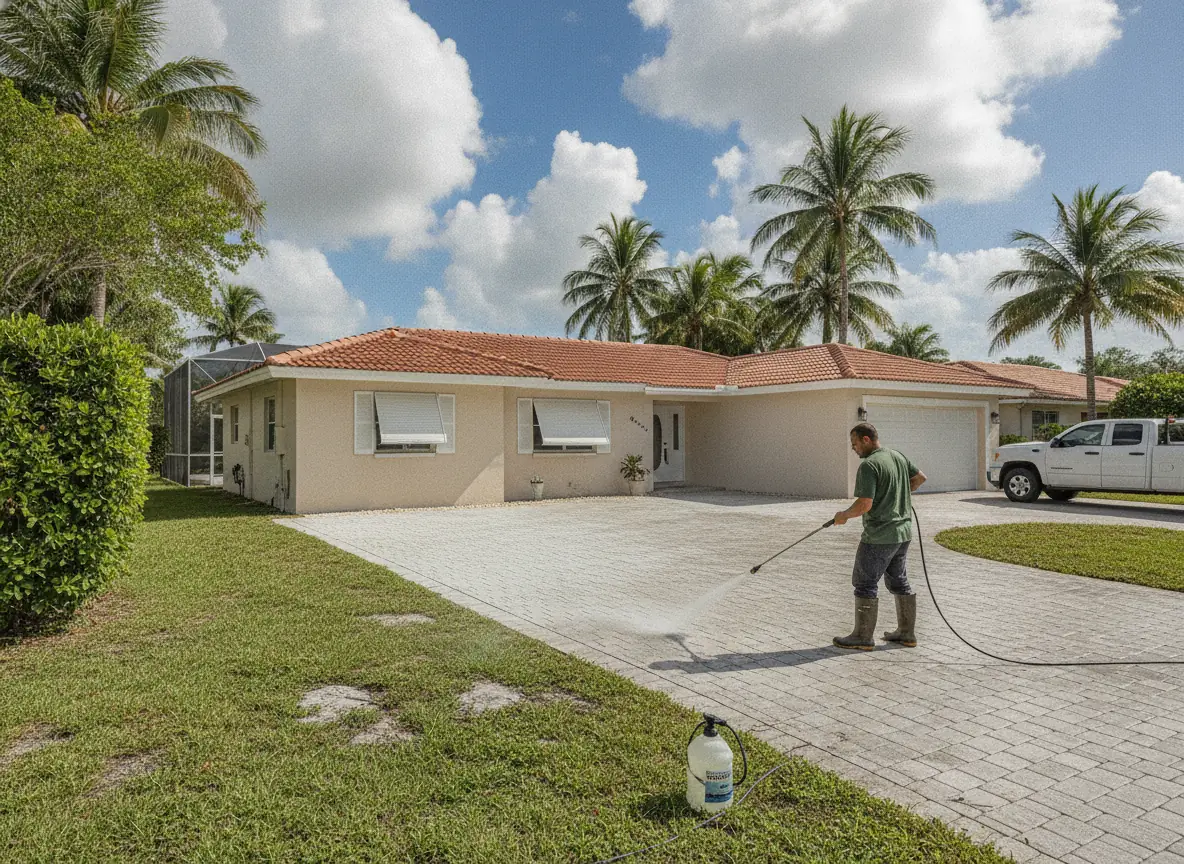
Illustration of a typical Miami driveway, not a specific job.
When sealing goes wrong
"Turns milky when in contact with water"
It looked great the day it was sealed, then the first rain left white blotches that come back every time it gets wet. Moisture got trapped under the sealer. It can usually be fixed, but it's far easier to avoid by sealing only a dry slab on a dry day.
"Not much you can do now except wait and see if the rain ruined it"
The sealer went on in the morning and the afternoon storm came early. In Miami from June to October, a crew that seals without watching the radar is gambling with your driveway.
"Hasn't returned a call since"
The quote was quick, the job was booked, and then the day came and went. Sealing is a short job, which makes it easy for a crew to squeeze in or skip. Get the date and the price in writing.
Driveway, patio or pool deck due for a clean and seal? Call and we'll connect you with a contractor serving your area.
Ask how long they wait between pressure washing and sealing, whether they use a moisture meter, and what the forecast has to be. A Florida paver sealer in the research describes efflorescence cleaner, a neutralizer, a surface-cleaner wash, then waiting until it's dry, because "Anything left on the surface will be there" once it's sealed.
Eighteen of the 108 stories we read were about sealer turning white. Nothing else came close.
"No show no call"
No-shows, unanswered calls and vanished deposits came up 22 times. For a job this size, there's little reason for a big deposit. Pay most of it when it's done and dry.
After the white haze, this was the next biggest complaint.
"Anything you use to seal concrete will make it more slippery"
Every Miami pool deck gets wet. A wet-look gloss sealer is the slick one. Ask for a matte or penetrating sealer by the pool, or a grit additive in the last coat, and test a wet sample.
Ten people wrote about a pool deck that turned slick after sealing, a lot of them parents of small kids.
What sealing costs
The one Florida price in our research was a complaint: "$1450 and it took one hour" for sealing pavers on a new driveway, posted in a thread about overpriced services. Another homeowner asked about a $1,170 quote for a paver driveway. That's the range people are seeing.
What moves the price: square footage, how dirty it is (black mildew takes more cleaning), resanding paver joints, stripping old sealer that has gone white, and the sealer itself. Each of those should be its own line on the quote.
Is sealing worth it?
Some homeowners call masonry sealer a waste of money, and on a plain broom-finish driveway that's often fair: a good clean every year or two may be all it needs. Sealing earns its keep on pavers, where it helps hold the joint sand, and on stamped or colored concrete, where it protects the color from the sun. A decent contractor will tell you which one you've got, and whether sealing would actually do anything for it.
What to ask before they seal
They name the sealer and explain why it suits your surface.
A dry-time rule and a weather rule they'll stick to.
Paver joints resanded after washing, with the right sand.
A slip-resistant option for anything near the pool.
Little or nothing up front.
Miami specifics: mildew, humidity and sand
Shaded driveways and pool decks in Miami grow dark green and black mildew. Cleaning takes it off; sealing slows how fast it comes back. Humidity is the other half: a surface can feel dry and still hold water, which is why the waiting time matters more here than in a dry climate.
On pavers, pressure washing blows the sand out of the joints, so resanding is part of the job. One Florida paver sealer in the research recommends angular sand rather than polymeric, swept in only when the pavers are dry and kept just below the top edge. Installers disagree on that; ask yours what they use and why.
The order of the job
Connected
Zip code, plus what you want sealed, and you're connected to a contractor nearby.
Look and quote
Surface, stains, old sealer, joints and square footage.
Clean
Pressure clean, treat stains and mildew, rinse.
Dry
Wait for a dry surface and a dry forecast, then resand pavers.
Seal
Usually one or two coats, then stay off it as long as the product says.
Sealing questions
Any ideas why my recently sealed concrete patio turns milky when in contact with water?
Moisture is trapped under or in the sealer, usually because it went on a damp slab or rain hit it too soon. Some solvent-based sealers can be re-dissolved to let the moisture out; others need stripping. Have the installer look before you try anything.
How do I deal with all the fog and humidity when the pavers need to be dry at least 48 hours?
Pick a stretch of dry days, wash first and seal later, and check moisture before sealing. In Miami that often means the drier months from November to April.
Would I be safe to apply a second layer of sealer, or is it too late?
It depends on the sealer and how long ago the first coat went on. Some need the second coat within hours, some can be recoated later. The label or the installer will tell you; a second coat over a hazy first coat usually makes it worse.
The pavers were professionally power washed and now the top is peeling or flaking. Why?
Either old sealer is lifting, or the washing was too aggressive for the paver surface. Get the contractor to look. Flaking old sealer should come off before anything new goes on.
What's the best concrete sealer that's non-slip for a pool deck?
A matte or penetrating sealer is less slick than a wet-look gloss, and a grit additive in the last coat adds traction. Test a wet sample before doing the whole deck.
Last updated
Ask how they'll keep it from turning white before they seal
Phones are answered 8am to 8pm, 7 days. Tell them the job, the size and your zip code, and ask for a written, itemized price.